Maximum Fat Loss And Muscle Maintenance Foods

Bruno-Muscle-Maintenance-Foods

Egg whites

Finally, the last food you want to make a staple of your ab diet are egg whites. As a quick and relatively cost effective form of protein, they are rapidly digested by the body so your muscle cells can get the amino acids they need.
Additionally, there are a vast number of ways to cook and prepare egg whites, further increasing your meal options while on the diet. As many dieters already know, when meal selection becomes scarce, that’s usually about the same time that dietary adherence also falls by the wayside. Anything that helps to avoid this issue is going to serve to keep you on track. The fact that egg whites don’t take long to prepare further increases the chance you’ll turn to them instead of a double cheeseburger from your local drive-thru.

Peanut butter

Peanut butter is one of the foods that many dieters find themselves craving as they progress on their diet. And it can actually be a terrific choice when it comes to food selection in your quest for visible abs.

Two big advantages that peanut butter has to offer are that it is has a very high satiety effect and it is chock full of healthy fats. It will only take one or two tablespoons to give you hunger control that lasts for hours and help meet your good-fat requirements.

Since you likely won’t be spreading this over a bagel, consider mixing it into your oatmeal, using it to create a tasty Thai sauce recipe for your vegetable stir-fry or just eating it plain, as is.

Be sure when you purchase your peanut butter that you look for the natural variety, as they will contain fewer added sugars that can be particularly problematic when trying to lose fat around the waist.

Spinach

Since you’re likely to be eating a lot of salads on your way to getting ripped abs, you need to try to make the most of these. Spinach is a nutritional powerhouse — it contains a high amount of carotenoids, such as beta-carotene and lutein, as well as quercetin, which is a phytochemical that presents antioxidant effects. In addition to that, you’ll also get folic acid, vitamin K, magnesium, manganese, and more protein from spinach than from many of the other vegetable options.

As a side note to your spinach intake: try to eat it cooked once in a while as the cooking process really serves to bring out the antioxidant effects it carries.

Unsweetened oatmeal

When it comes to the carbohydrates you do take in, you want to make the most of your allotted calories. While there are other sources that are slow digesting, free of sugar and will work for fat loss, oatmeal is going to provide you with more volume per calorie, thus helping you feel full.

At only 147 calories per cup of cooked oatmeal, it beats rice and baked potatoes, which come in at 216 and 180 calories, respectively.

To enhance the flavor of plain oatmeal, try adding in artificial sugar, cinnamon or even mixing in protein powder to really boost the taste and make it more of a complete meal.

Coconut oil

One type of oil that many people rarely even think about eating is coconut oil, and it can actually be beneficial when added to your selection of ab foods.

The primary reason why coconut oil is a good ab food is due to its composure of medium chain triglycerides that are handled by the body differently than most other fats. They are able to be used as energy much quicker than the usual fats are, thus, if you are not eating very many carbohydrates for energy, this can help to prevent that energy slump you experience.

Don’t make the mistake of not factoring the calorie content though, it is a fat and will still supply your body with nine calories per gram. Be sure they are replacing other fats or carbohydrates in your diet, so that they’re not just added in with the ones currently there. Another interesting thing about coconut oil is that for the first week or so of consumption, it slightly bumps up the metabolism before the body adapts to it. So, even if you decide not to incorporate it into your plan long-term, using it for a week might just help give your diet that extra kick you need at this point.

Apples

If you’ve cut down your carb intake, and as you move toward the 5% to 8% body fat range, hunger will likely be an issue. Your body simply does not like being this lean and it’s going to fight you. Hunger is a good way of doing so.

Further to the point, on diets that are very low in calories (like diets full of ab foods), you are definitely going to be in a catabolic state (tissue breakdown). This can spell trouble for the muscle mass you’ve worked so hard to attain and it needs to be minimized.

The liver is the primary determinant (after total calorie intake) of whether you are in a catabolic or anabolic state. As such, the type of carbohydrates in fruit is treated slightly different than, say, the carbohydrates in rice or bread, and will send a much stronger signal to the liver to not be in a catabolic state.

You may still not be able to cross over into an anabolic state since that’s near impossible if you are eating under maintenance, but you can minimize the damage done to your tissues. Fruit will help you do this; shoot to eat one to two pieces a day.

Apples as ab food work great because they won’t raise blood sugar very much and will supply you with plenty of fiber, which helps with the hunger issue.

Low-sodium cottage cheese

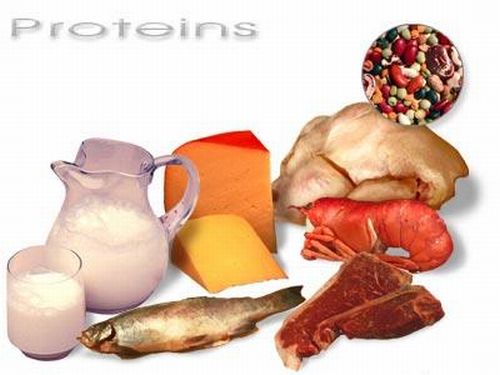
Protein is an integral component to a fat-loss diet because it’s the single macronutrient that is going to promote muscle maintenance. You can cut both fat and carbohydrates down, but without enough protein your results will be less than optimal.

However, all proteins are not alike. When dieting to very low caloric digits, hunger is going to be calling your name. You want to minimize this by selecting ab foods that are going to digest the slowest and keep you satisfied the longest. Dieting on ab foods gets tough when 20 minutes after a meal, you’re ready for the next.

Cottage cheese is a terrific source of casein protein — one of the slowest digesting protein sources out there. When shopping for your cottage cheese, opt for a low-sodium variety. While salt is not necessarily always a bad thing, depending on your current health status and the rest of your diet, in the case of abs, we need to minimize water retention as best as possible.

At about 500 mg of sodium per half-cup of regular cottage cheese, water retention could prove to be an issue.

What do you think of this post?
  • Awesome (0)
  • Interesting (1)
  • Useful (0)
  • Boring (0)
  • Sucks (0)

Grams Of Protein You Should Be Eating In A Day

Protein-sources

Have you ever found yourself wondering, how many grams of protein should I eat in a day?

The answer to that can be relatively simple or complex. There are some questions you should ask yourself before you ask how many grams of protein should I eat in a day? Ask yourself, what are my goals? Do you lead a sedentary or active lifestyle? Once you have decided what kind of goal you have in mind and have answered what kind of lifestyle you lead then you can have a better understanding of “how many grams of protein should I eat in a day?”

Active vs. Sedentary Lifestyle General Guidelines:

Although daily estimates for how many grams of protein should I eat in a day varies, a general guideline for people that lead a sedentary lifestyle is that you need to consume about 0.8 grams per kilogram (2.2 pounds) of ideal bodyweight (the weight you would like to be). A general guideline for the more active person who is looking for gains in strength should be to consume 1.2 to 1.4 grams of protein per kilogram of ideal bodyweight.

If you are a sedentary male weighting 140lbs you should be consuming 50.4 grams of protein per day.
Calculation= (140lbs/2.2) * 0.8 = 50.4 grams

If you are an active male weighing 140lbs you should be consuming 76.36 to 89.1 grams of protein per day.
Calculation= (140lbs/2.2) * 1.2 = 76.36 grams
Calculation= (140lbs/2.2) * 1.4 = 89.10 grams

What is your Goal?

The question of “How many grams of protein should I eat in a day” really depends on your goals. Do you want to lose weight, gain strength, increase performance or just increase your quality of life?

Dieting and your ideal bodyweight:

Using the above formulas can also help you answer the question of “how many grams of protein should I eat in a day?” if you want to lose weight.

If you lead an active lifestyle and currently weigh 140lbs you should be eating about 76 to 89 grams of protein per day (based on the above calculations). If you want to decrease your body weight to 130lbs you should be eating 71 to 83 grams of protein per day.

If you lead a sedentary lifestyle and currently weigh 140lbs you should be eating about 50 grams of protein per day (based on the above calculations). If you want to decrease your body weight to 130lbs you should be eating 47 grams of protein per day.

Strength and Performance:

If you want to gain strength or increase your performance more than likely you will want to eat more protein than the average person. Consuming about 1.2 to 1.4 grams of protein per kilogram of ideal bodyweight (what you want to weigh) is the advice usually given by seasoned bodybuilders. Just remember to balance your protein intake with the right amount of carbohydrates.

If you lead an active lifestyle and currently weigh 140lbs you should be eating about 76 to 89 grams of protein per day (based on the above calculations). If you want to increase your body weight to 160lbs you should be eating 87 to 102 grams of protein per day.

What do you think of this post?
  • Awesome (0)
  • Interesting (0)
  • Useful (0)
  • Boring (0)
  • Sucks (0)

Muscles & Alcohol

Muscle-Alcohol

Alcohol and growth hormones

One major issue with the consumption of alcohol has to do with its effects on the release of growth hormone. Growth hormone is the substance in the body that plays a very large role when it comes to building muscle, stimulating other cell growth and development, and promoting optimal bone growth. When this hormone is low, you aren’t going to get the same amount of muscle development as you would when it’s at an optimal level.

Growth hormone is predominately secreted during the early sleeping hours of the night and because alcohol tends to disrupt the natural sleep rhythms that occur, it will decrease the amount of growth hormone released. This decrease can be up to as much as 70%, so it will really short-circuit the progress you are able to make.

Alcohol and testosterone

The next factor to consider is alcohol’s effect on testosterone. As you likely know, testosterone is another huge hormone associated with muscle growth and is the reason why men carry a great deal more muscle mass than women (since men have more testosterone flowing through their bodies).

When you consume alcohol, however, a substance is produced in the liver that is toxic to the release of testosterone. This substance decreases the concentration of testosterone in the body, resulting in lower muscle mass and definition.

Alcohol and recovery

Another area that alcohol affects when it comes to muscle building is your ability to recover. Since alcohol is a toxin to the body, energy is going to have to be expended in order to remove it from the system and to recover from any negative effects it has had on the tissues.

Since this takes time and energy reserves, you won’t have as much energy in store to recover from your workouts, therefore you will not be as fresh when you return for your next gym session.

Alcohol and dehydration

Dehydration is another issue you have to watch out for if you choose to drink alcohol while trying to build muscle and work out. Since alcohol acts as a diuretic in the body, unless you are sure to replace the extra fluid with water or another non-alcoholic beverage that doesn’t contain caffeine, your natural water balance will be disrupted.

Dehydration has a number of negative effects on the body, from inducing feelings of fatigue to causing low physical performance, making you feel hungrier (which is especially problematic while dieting), and disrupting the ability of the muscle cells to produce ATP — which is your primary source of muscular energy.

Alcohol and glycogen synthesis

Aside from ATP, the next source for muscular work is stored muscle glycogen. Unfortunately, though, when you consume alcoholic beverages, alcohol synthesis will take precedence over glycogen synthesis, resulting in decreased stores in the muscle cells.

When you go to do your next workout, your body will have less energy to run on, causing fatigue to set in early.

When your workouts are ended prematurely , you won’t derive as many benefits in terms of increases in strength since the necessary overloading stimulus (which is partly defined through volume of weights lifted) will not be increased.

Alcohol and aerobic ability

If you aren’t as concerned with your strength levels and figure this means alcohol is a safe bet for you, you may want to think again. Even when it comes to aerobic activities, alcohol affects performance.

In this scenario, alcohol can cause an increase in blood pressure throughout the body and a corresponding increase in heart rate.

Since your heart will already be working at an increased rate during aerobic activities, the additional stress from the alcohol will only amplify the heart rate and make the exercise feel harder than it should.

Alcohol and body fat

Finally, the last issue surrounding alcohol consumption is that it contains calories, and these do add up quickly. Typically, you’ll likely find yourself drinking beer, wine or hard liquors, which do contain fewer calories than the fancier, sweeter-tasting cocktails that women often drink, so at least that’s an advantage.

Still, at seven calories per gram, after three or four drinks, these calories would equal a good-sized meal. Unless you are going to cut down on food intake in order to make room for these calories (which is rare, as usually you’ll actually find yourself snacking on high-calorie items such as nuts, pizza, wings or nachos), fat gain will result.

Alcohol and muscles don’t usually get along, so consume with care.

What do you think of this post?
  • Awesome (0)
  • Interesting (0)
  • Useful (0)
  • Boring (0)
  • Sucks (0)